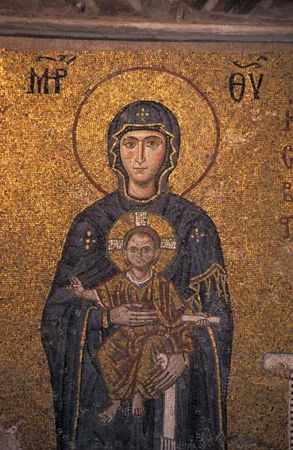
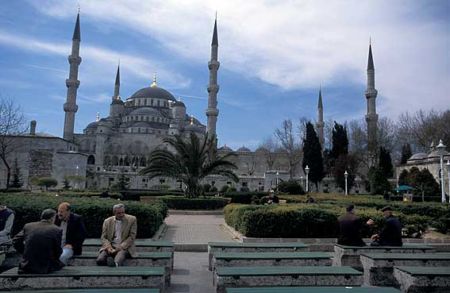
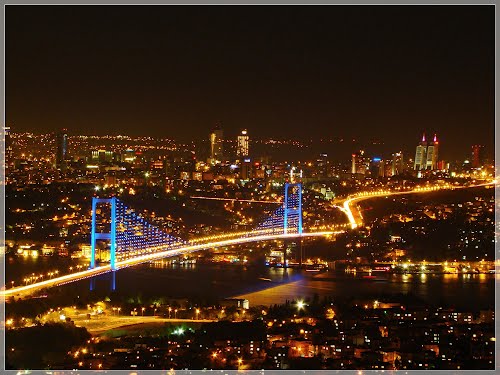
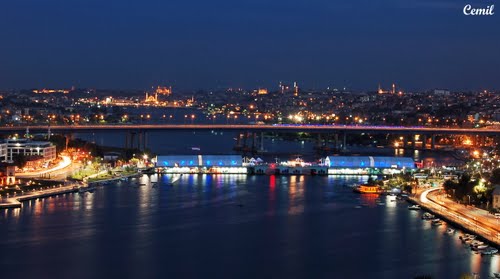
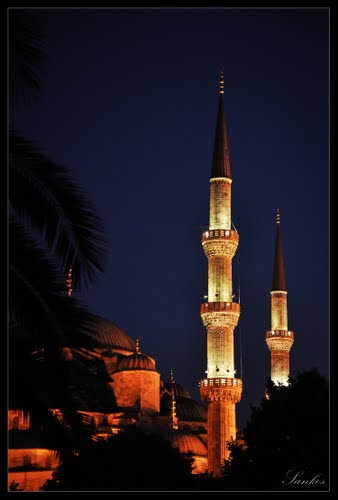
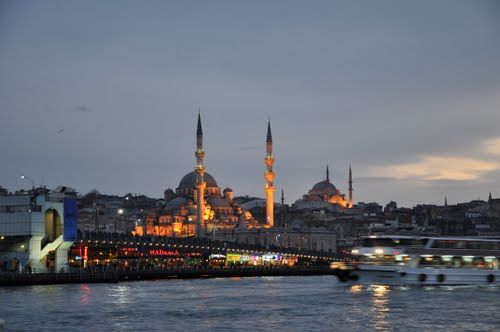
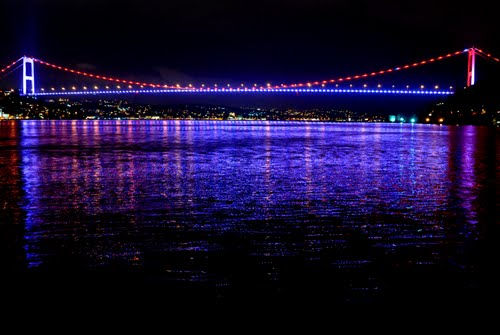
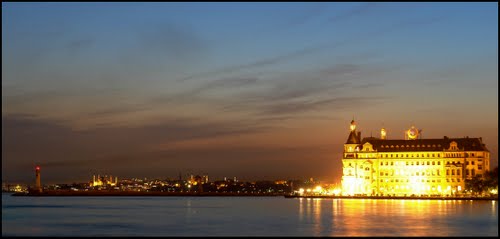
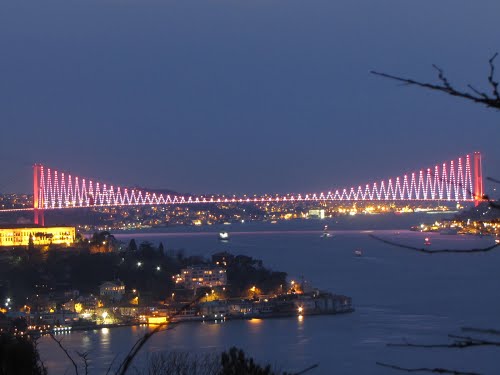
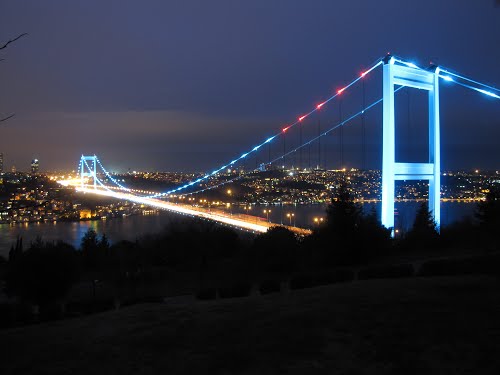
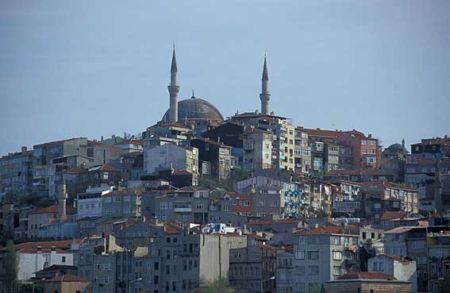
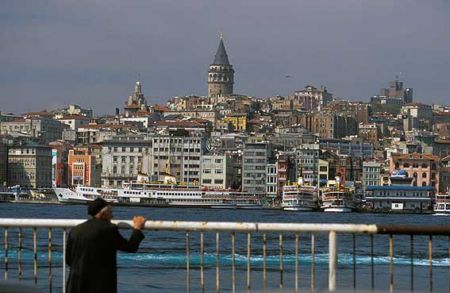
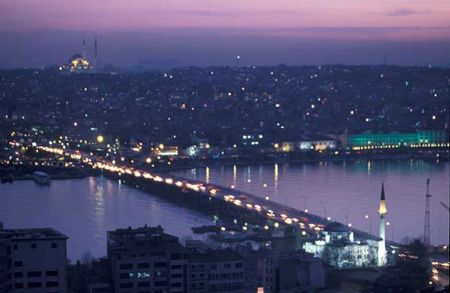
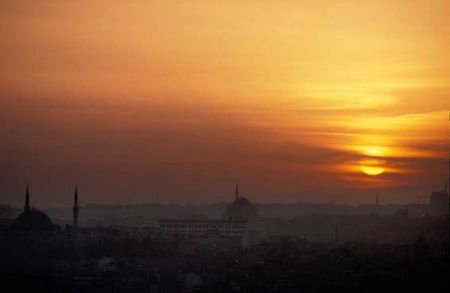
Istanbul (Turkish: İstanbul) is Turkey's most populous city, and its cultural and financial center. Located on both sides of the Bosphorus, the narrow strait between the Black Sea and the Marmara Sea, Istanbul bridges Asia and Europe both physically and culturally. Istanbul's population is estimated to be between 12 and 19 million people, making it also one of the largest in Europe and the world.
Istanbul was one of three European Capitals of Culture in 2010
Summer is generally hot with averages around 27ºC during the day and 18ºC at night. High relative humidity levels and the ‘concrete-island effect’ only make things worse. Expect temperatures of up to 35° C for the hottest days of the year. Summer is also the driest season, but it does infrequently rain. Showers tend to last for 15-30 minutes with the sun usually reappearing again on the same day. Flash floods are a common occurrence after heavy rainfalls (especially during summer), due to the city's hilly topography and inadequate sewage systems.
Winter is cold and wet, averaging 2ºC at night and 7ºC during the day. Although rarely below freezing during the day, high relative humidity levels and the wind chill makes it feel bitterly cold and very unpleasant.
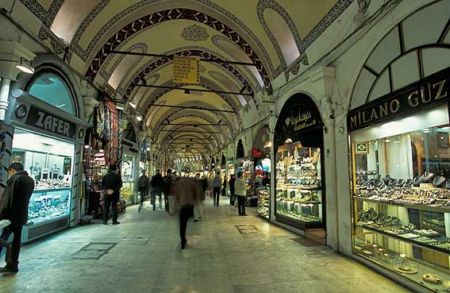
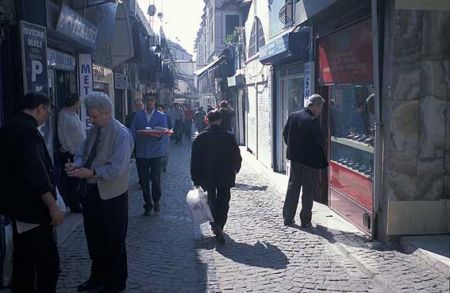
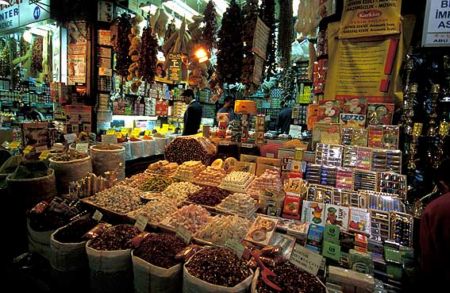
Connecting east and west, the will to control the major trading routes was the reason why Istanbul was founded in the first place, so shopping should definitely not be overlooked in your Istanbul experience.
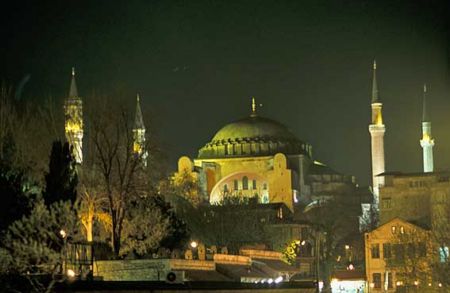
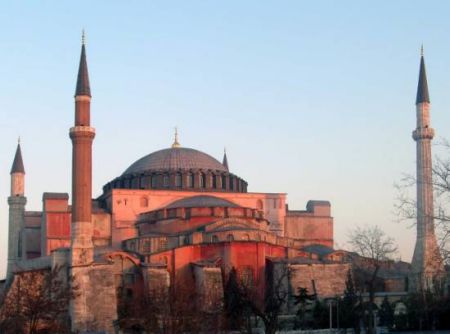
The currency used in Istanbul is the Turkish Lira (TL) though the euro and US dollar are also accepted at places frequented by tourists (although certain tourist attractions such as the Hagia Sophia only accept liras). Currency exchanges (döviz bürosu) and banks are plentiful in Istanbul and offer extremely competitive exchange rates with no commission charged. If you are planning to visit Istanbul, bring hard foreign currency and exchange them after you arrive, preferably at a bank or a currency exchange
Beyoğlu is notoriously known for its night life; it's full of cafes and bars with live music. People from all classes and ethnicity can be found here.
Nişantaşı is the place for young entrepreneurs and artists, the prices are higher than Taksim.
Kadıköy also has a nightlife scene, serving mostly locals of this part of the city. It is usually has more easy-going style of nightlife, usually with local pubs and wine houses and traditional meyhanes. If you are not staying on that side of the city, it may not worth the trouble to make an inter-continental trip just to have a drink, but drop by if you are around and thirsty.
Nightclubs - While there are night clubs all over the city, two of the hottest clubs of Istanbul are in Ortaköy.
Istanbul (in turco İstanbul, pronuncia ; in italiano fino al XIX secolo anche Costantinopoli ; in greco Κωνσταντινούπολη), capoluogo della provincia omonima, è il principale centro industriale, finanziario e culturale della Turchia. Con una popolazione di 12. 782. 960 abitanti, è il centro municipale (città propria) più popoloso d'Europa (terzo nel mondo) e la terza area metropolitana più popolosa in Europa dopo Mosca e Londra.
Istanbul è una megalopoli e si trova sullo stretto del Bosforo e comprende il porto naturale conosciuto come il Corno d'Oro, situato nel nord-ovest del paese. Si estende sia sul versante europeo del Bosforo (Tracia) che su quello asiatico (Anatolia) facendo si che sia l'unica metropoli al mondo che si trova su due continenti. Istanbul è considerata una città globale.
Nel corso della sua lunga storia, Istanbul (chiamata Bisanzio fino al 330 e poi Costantinopoli sino al 1930) è stata la capitale dell'Impero Romano (330-395), dell'Impero Bizantino (395-1204 e 1261-1453), dell'Impero Latino (1204-1261) e dell'impero Ottomano (1453-1922). Conosciuta anche con il nome di seconda Roma è stata fino alla conquista turca (1453) una tra le più grandi città della cristianità. Quando è stata proclamata la Repubblica di Turchia, il 29 ottobre 1923, Ankara, che in precedenza aveva servito come quartier generale del movimento cittadino turco durante la guerra d'indipendenza turca, è stata scelta come capitale del nuovo Stato turco.
Istanbul è stata dichiarata una delle capitali europee della cultura per il 2010. Sin dal 1985, i quartieri storici di Istanbul fanno parte della lista UNESCO dei patrimoni dell'umanità.
Description above from the Wikipedia, licensed under CC-BY-SA full list of contributors
here.